
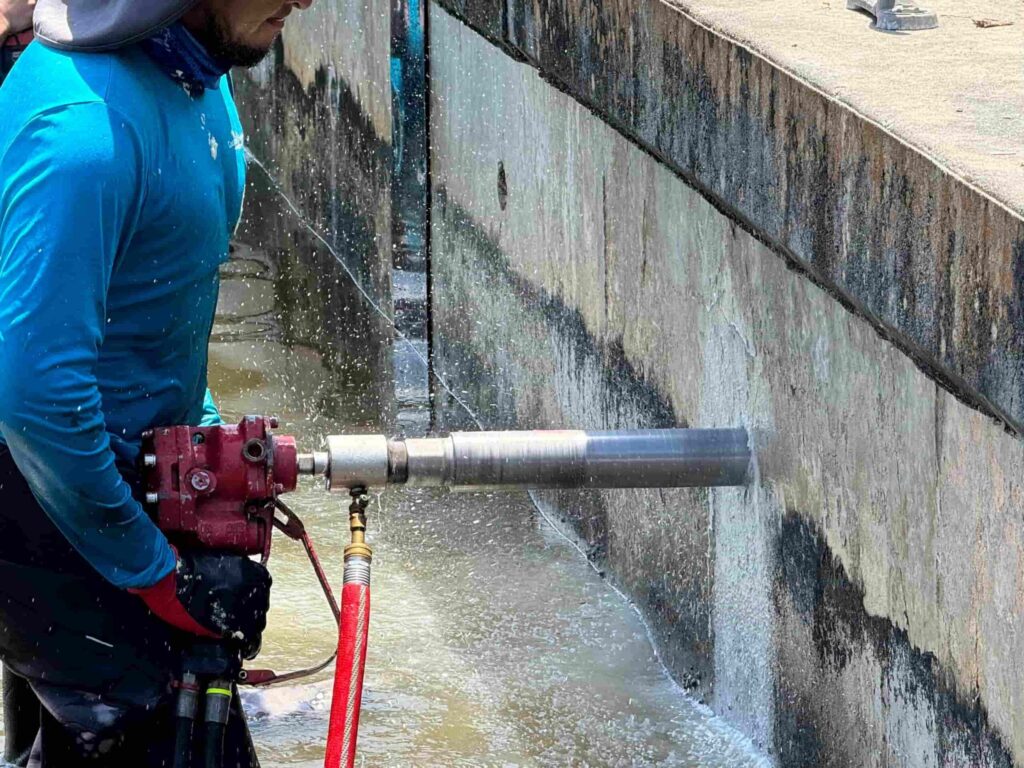
Preventive Maintenance for Seawalls: What Actually Works
- April 1, 2026
Introduction: Why Preventive Seawall Maintenance Matters More Than You Think
Most seawall failures don’t happen overnight. They happen quietly—behind the wall, below the surface, and out of sight—until the damage is expensive, disruptive, and unavoidable.
Preventive maintenance for seawalls works when it focuses on managing water pressure, soil loss, and structural connections before visible failure occurs. That means routine inspections, proper drainage, timely seam repairs, and proactive reinforcement—not waiting for leaning walls or sinkholes to appear.
In this guide, you’ll learn:
- What preventive seawall maintenance actually means (and what it doesn’t)
- Which strategies are proven to extend seawall lifespan
- Common myths that lead to premature failure
- Expert-backed best practices used by professional seawall contractors
Whether you’re a homeowner, HOA board member, or property manager, this article breaks it down in clear, practical terms.
What Preventive Seawall Maintenance Means for Property Owners & HOAs
Preventive seawall maintenance is not cosmetic. It’s not about patching cracks for appearance or reacting only after damage becomes obvious.
At its core, preventive maintenance focuses on three controllable forces that cause most seawall failures:
- Water pressure behind the wall
- Soil erosion and void formation
- Gradual loss of structural strength over time
A Simple Analogy
Think of your seawall like a retaining wall holding back wet sand.
If water can’t escape, pressure builds.
If soil washes out, the wall loses support.
If connections weaken, the wall starts to move.
Preventive maintenance addresses all three—early.
For:
- Homeowners: It protects property value and avoids emergency repairs.
- HOAs & Commercial Properties: It reduces liability, budgeting shocks, and long-term capital expenses.
Managers & Decision Makers: It creates predictability and extends asset lifespan.
Why Preventive Seawall Maintenance Matters (Data & Expert Insight)
The Cost of Waiting
Industry studies and field data consistently show:
- Preventive maintenance can extend seawall lifespan by 15–30 years
- Reactive repairs often cost 2–5x more than proactive solutions
- Most seawall failures start behind the wall, not at the face
“By the time a seawall visibly leans or cracks widen, the real damage has usually been happening underground for years.”
— Seawall Inspection Specialist, SWFL
Environmental & Regional Factors
In coastal regions like Florida:
- Saltwater accelerates concrete and steel degradation
- Tidal cycles increase hydrostatic pressure
- Sandy soils are highly susceptible to erosion
These conditions make preventive maintenance essential, not optional.
Step-by-Step Preventive Seawall Maintenance Best Practices
1. Schedule Routine Seawall Inspections (Annually or Biannually)
- Hairline cracks or seam separation
- Soil voids behind the wall
- Blocked or missing drainage systems
- Early wall movement or rotation
- Homeowners: every 2–3 years
2. Maintain and Upgrade Seawall Drainage Systems
Drainage is the single most important factor in seawall longevity.
Why it matters:
When water can’t escape, hydrostatic pressure builds up and pushes the wall forward.
Preventive solutions include:
- Installing or clearing weep holes
- Adding modern seawall drain systems
- Replacing corroded or clogged drains
No drainage = pressure buildup = structural failure risk.
3. Seal Seams and Cracks Before Soil Loss Begins
- Fine soil particles to wash out
- Voids to form behind the wall
- Progressive weakening over time
- Polyurethane or epoxy seam sealing
- Flexible joint materials that move with the wall
- Crack injection for early-stage separation
4. Stabilize Soil with Foam Injection (Void Filling)
- Fills voids behind the wall
- Stops further erosion
- Restores backfill support
- Reduces hydrostatic pressure pathways
- Non-invasive
- Fast-curing
- Ideal for early to mid-stage maintenance
5. Reinforce Aging Walls with Helical Tie-Back Anchors
As seawalls age, they slowly lose their ability to resist lateral pressure.
Helical tie-back systems:
- Transfer load from the wall to stable soil inland
- Reduce forward movement
- Extend the usable life of older seawalls
This is a preventive reinforcement strategy,
6. Repair or Replace the Seawall Cap
The seawall cap protects the top edge from:
- Water intrusion
- Freeze-thaw damage
- Surface cracking
A compromised cap allows water to enter behind the wall, accelerating deterioration.
Preventive actions:
- Resealing joints
- Replacing cracked caps
- Upgrading to reinforced caps when needed
Common Preventive Maintenance Myths (and Why They Fail)
Myth #1: “If it’s not leaning, it’s fine”
Most seawalls fail internally long before visible movement occurs.
Myth #2: “Cracks are just cosmetic”
Cracks are often entry points for water and soil loss.
Myth #3: “New seawalls don’t need maintenance”
Even new walls require drainage checks and seam sealing.
Myth #4: “I’ll fix it after hurricane season”
Storms exploit existing weaknesses—maintenance should happen before severe weather.
Pro Tips & Tools Used by Seawall Experts
Professional Tools & Techniques
- Subsurface probing to detect voids
- Hydrostatic pressure assessment
- Drain flow testing
- Structural alignment monitoring
Expert Maintenance Framework (The 4P Model)
- Pressure Control – drainage & weep systems
- Prevention – sealing seams and cracks
- Preservation – foam injection & soil stabilization
- Protection – anchors and cap systems
Frequently Asked Questions (FAQs)
Most professionals recommend every 1–3 years, or after major storms.
Proper drainage. Without it, all other repairs are temporary.
In many cases, yes—especially when addressed early.
It’s a long-term solution when used appropriately and combined with drainage.
When walls show early movement or loss of lateral resistance but are not yet failing.
Final Takeaways: What Actually Works
Preventive seawall maintenance works when it is:
- Proactive, not reactive
- Focused on water management
- Addressing problems before visible failure
The most effective strategies combine:
- Regular inspections
- Drainage optimization
- Seam sealing
- Soil stabilization
Structural reinforcement when needed
If you’re unsure about the condition of your seawall, a professional inspection is the smartest first step. Early insight leads to better decisions—and far lower costs.
Schedule a seawall evaluation with Seawall Savers to understand your risks, options, and long-term plan.
Related Posts
- All Posts

Recent Posts
-
Concrete vs. Vinyl vs. Steel Seawalls: Pros, Cons & Longevity
-
How Long Do Seawalls Last in Florida? A Complete Homeowner & Investor Guide
-
Preventive Maintenance for Seawalls: What Actually Works
-
Saltwater, Soil Loss & Hydrostatic Pressure Explained Simply
-
Signs Your Seawall Needs Professional Attention (Not an Emergency)