
Concrete vs. Vinyl vs. Steel Seawalls: Pros, Cons & Longevity

Concrete vs. Vinyl vs. Steel Seawalls: Pros, Cons & Longevity

A Buyer & Builder Comparison Guide

Introduction: Choosing the Right Seawall Is a Long-Term Decision

If you’re building, replacing, or evaluating a seawall, one decision shapes everything that follows: material choice.

Concrete, vinyl (PVC), and steel seawalls all protect waterfront property—but they perform very differently over time. In Florida and other coastal environments, material selection affects lifespan, maintenance costs, repair options, and long-term risk.

Short answer:
  • Concrete seawalls are durable and common but require drainage and maintenance.
  • Vinyl seawalls resist corrosion but rely heavily on anchoring and soil stability.
  • Steel seawalls offer high strength but face corrosion challenges in saltwater.

In this guide, you’ll learn how each seawall material performs in real-world conditions, what commercial buyers and builders should consider, and how to choose the option that delivers the best long-term value—not just the lowest upfront cost.

What This Topic Means for Buyers, Builders & Waterfront Owners

For homeowners, the right seawall material protects property value and avoids surprise repairs.

For HOAs and commercial properties, material choice impacts:

  • Capital reserve planning
  • Liability and safety
  • Inspection outcomes
  • Insurance and resale value

For builders and developers, it affects:

  • Construction timelines
  • Engineering requirements
  • Long-term warranty exposure

A seawall is not just a wall—it’s a structural system interacting with soil, water, anchors, and drainage. Choosing the wrong material for the environment often leads to premature repairs or full replacement years earlier than expected.

Why Seawall Material Choice Matters (Data & Expert Insight)

Based on coastal engineering studies and Florida field inspections:

  • Over 60% of seawall failures begin behind the wall, regardless of material
  • Drainage and anchoring matter more than material alone
  • Many seawalls replaced early could have lasted decades longer with proper design

“Material choice sets the baseline, but performance depends on how the seawall manages water pressure and soil movement over time.”
— Marine Structural Engineer

This means no seawall material is “maintenance-free.” Each has strengths—and predictable weaknesses.

The Three Main Seawall Materials Explained

1. Concrete Seawalls

Best for:

Residential canals, HOAs, marinas, commercial waterfronts

Average lifespan:

30–50 years (often longer with maintenance)

Concrete seawalls are the most common type in Florida. They’re strong, rigid, and capable of handling significant loads when properly reinforced.

Pros of Concrete Seawalls

  • High structural strength
  • Long track record in Florida
  • Can be repaired and reinforced over time
  • Compatible with modern stabilization methods

Cons of Concrete Seawalls

  • Porous material allows saltwater intrusion
  • Internal rebar can corrode over time
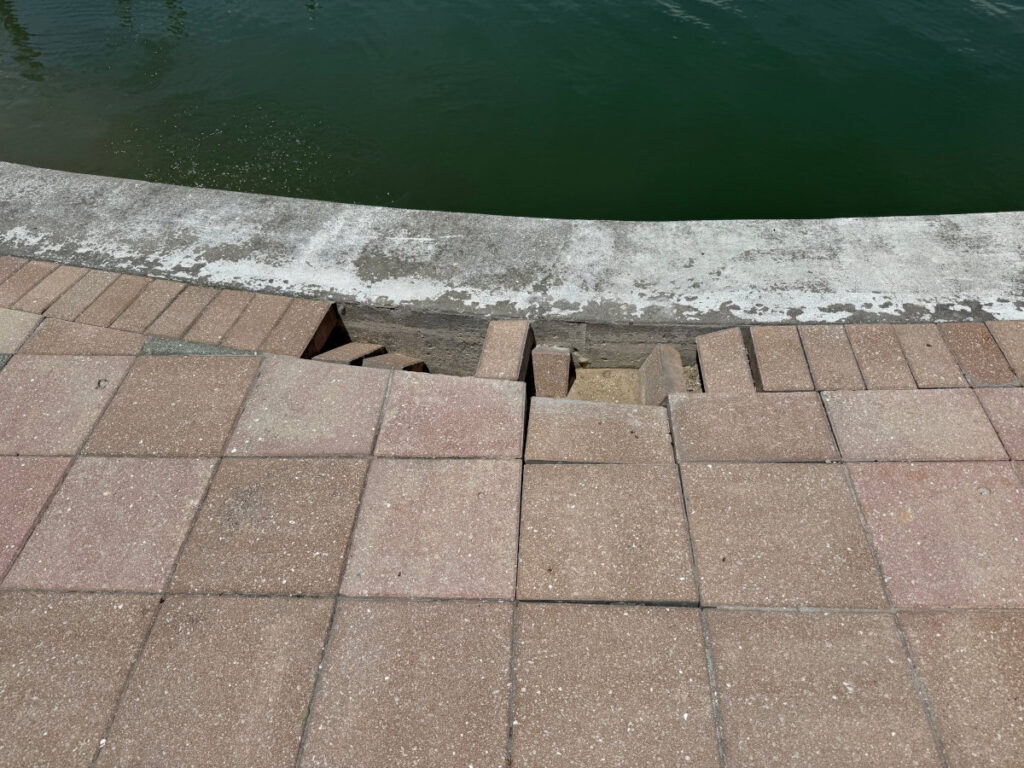
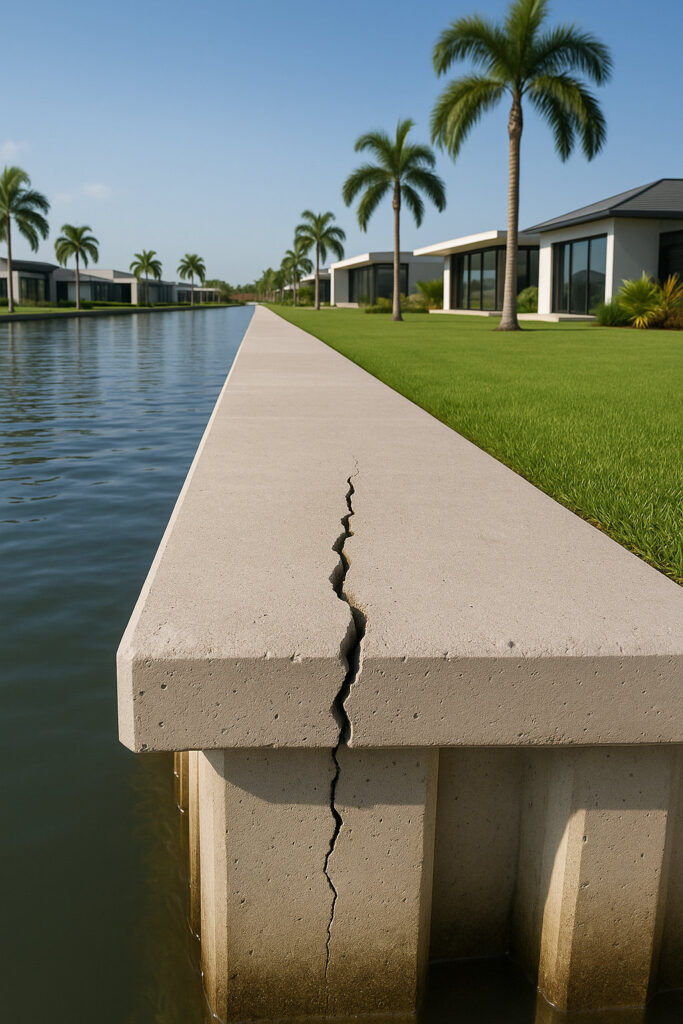
  • Cracking and spalling are common without drainage

Longevity Factors

Concrete seawalls last longest when paired with:

  • Seawall drain installation
  • Seam and joint repair
  • Foam injection for soil stabilization
  • Helical tie-back anchor systems

Without these, even well-built concrete seawalls can deteriorate prematurely.

2. Vinyl (PVC) Seawalls

Best for:

New construction, residential replacements, low-corrosion environments

Average lifespan:

35–50+ years
Vinyl seawalls resist corrosion and are increasingly popular in new builds. However, vinyl panels are flexible and rely heavily on proper anchoring.

Pros of Vinyl Seawalls

  • Excellent corrosion resistance
  • Lightweight and easier to install
  • Clean aesthetic appearance
  • Long lifespan when engineered correctly

Cons of Vinyl Seawalls

  • Lower stiffness than concrete or steel
  • Performance depends heavily on anchors
  • Can deflect or bow if soil is unstable

Longevity Factors

Vinyl seawalls require:

  • Proper tie-back anchor systems
  • Stable, well-compacted backfill
  • Drainage to reduce water pressure

Without adequate anchoring, vinyl seawalls may move even when panels remain intact.

3. Steel Seawalls

Best for:

Commercial ports, industrial sites, high-load applications

Average lifespan:

  • 20–35 years (unprotected)
  • Longer with coatings and cathodic protection

Steel seawalls offer exceptional strength but face corrosion challenges in saltwater environments.

Pros of Steel Seawalls

  • Very high load capacity
  • Thin profile allows more usable space
  • Ideal for heavy-duty applications

Cons of Steel Seawalls

  • Susceptible to corrosion
  • Requires protective coatings or cathodic systems
  • Higher long-term maintenance costs

Longevity Factors

Steel seawalls last longest with:

  • Protective coatings
  • Cathodic protection systems
  • Regular inspections and maintenance

Without protection, corrosion can significantly shorten lifespan.

Side-by-Side Comparison: Concrete vs. Vinyl vs. Steel

Feature
Concrete
Vinyl (PVC)
Steel
Typical Lifespan
30–50 yrs
35–50+ yrs
20–35 yrs
Corrosion Resistance
Moderate
High
Low (without protection)
Structural Strength
High
Moderate
Very High
Maintenance Needs
Moderate
Low–Moderate
High
Repair Options
Excellent
Moderate
Limited
Cost Over Time
Balanced
Often favorable
Often highest

Common Mistakes Buyers & Builders Make

Mistake #1: Choosing Material Based Only on Upfront Cost

Cheapest installation often leads to the highest long-term cost.

Mistake #2: Ignoring Drainage Design

Even the strongest seawall fails if water pressure builds behind it.

Mistake #3: Assuming “New” Means “No Maintenance”

All seawalls require inspections and upkeep.

Mistake #4: Underestimating Soil Conditions

Sandy or unstable soils demand reinforcement regardless of material.

Pro Tips & Tools Used by Seawall Experts

  • Professionals evaluate more than panels. They assess:
  • Soil conditions and voids
  • Drainage performance
  • Anchor load paths
  • Movement trends over time

Best practice sequence:

  1. Stabilize soil (foam injection)
  2. Relieve water pressure (drains)
  3. Reinforce structure (anchors)
  4. Maintain seams and caps

This approach extends the life of all seawall materials.

FAQs: Seawall Materials & Longevity

Longevity depends on maintenance. Vinyl and concrete can both exceed 50 years when properly engineered and maintained.

Not always. Vinyl resists corrosion but depends heavily on anchoring and soil stability.

Yes. Drains, foam injection, seam repair, and anchors often extend lifespan significantly.

No—but they require protective systems and ongoing maintenance.

Absolutely. Buyers and inspectors increasingly evaluate seawall condition and material type.

Final Takeaways: Choosing the Right Seawall Material

  • No seawall material is maintenance-free
  • Drainage and soil stability matter more than panel type
  • Concrete offers repair flexibility
  • Vinyl resists corrosion but needs strong anchors
  • Steel delivers strength but demands protection
  • Long-term performance depends on design, inspection, and maintenance

If you’re planning a seawall project—or evaluating an existing one—the smartest step isn’t guessing which material is “best.” It’s understanding how your seawall system works as a whole.
👉 Schedule a professional seawall inspection with Seawall Savers to evaluate material condition, lifespan, and the most cost-effective path forward—without pressure.

Previous Post

How Long Do Seawalls Last in Florida? A Complete Homeowner & Investor Guide

How Long Do Seawalls Last in Florida? A Complete Homeowner & Investor Guide

Introduction

If you own waterfront property in Florida, one question eventually comes up: how long will my seawall actually last?

The short answer: most Florida seawalls last between 25 and 50 years, depending on materials, soil conditions, water exposure, and—most importantly—maintenance.

In this guide, you’ll learn:

  • The average lifespan of different seawall types in Florida
  • What shortens (or extends) seawall life
  • How inspections, drains, and modern repair methods can add decades
  • When repair makes sense versus replacement

Whether you’re a homeowner, HOA board member, investor, or marina manager, this article gives you a clear, practical understanding of what to expect—and how to protect your shoreline investment.

What Seawall Lifespan Means for Florida Property Owners

A seawall isn’t just a retaining wall—it’s a structural system that protects:

  • Your land from erosion
  • Your foundation from soil loss
  • Your dock, pool deck, and waterfront improvements

In Florida, seawalls work harder than in most states due to:

  • Constant saltwater exposure
  • Sandy, shifting soils
  • Tidal movement and boat wake energy

Seasonal storms and heavy rainfall

For homeowners, a failing seawall can affect property value and safety.
For investors and HOAs, it impacts long-term capital planning and insurance risk.
For commercial and marina properties, it affects operations and liability.

Understanding lifespan helps you budget smarterschedule inspections, and avoid surprise repairs.

Why Seawall Longevity Matters (Data, Risk & Expert Insight)

According to coastal engineering studies and field inspections across Florida:

  • Over 60% of seawall failures begin behind the wall, not on the visible face 
  • Soil loss and hydrostatic pressure are the leading causes of premature failure 
  • Many seawalls replaced at 30 years old could have lasted 50+ with proper maintenance 

“Most seawalls don’t fail suddenly—they deteriorate slowly and quietly behind the wall,”
— Marine Structural Engineer Insight

This means lifespan isn’t fixed. Two seawalls built the same year can have very different outcomes depending on drainage, reinforcement, and inspection history.

Average Lifespan of Seawalls in Florida (By Material)

1. Concrete Seawalls

Average lifespan:

30–50 years

Common in:

Residential canals, HOAs, marinas

Concrete seawalls are strong but porous. Over time, saltwater intrusion can corrode internal rebar, leading to cracking and spalling.

What shortens lifespan:

  • Lack of drainage
  • Rebar corrosion
  • Poor backfill compaction

What extends lifespan:

  • Seawall drain installation
  • Seam and joint repair
  • Foam injection to stabilize soils

2. Vinyl (PVC) Seawalls

Average lifespan:

35–50+ years

Common in:

Newer construction and replacements

Vinyl seawalls resist corrosion but rely heavily on proper anchoring and soil stability.

Common issues:

  • Panel deflection
  • Anchor fatigue
  • Soil washout behind the wall

Tie-back anchor systems are critical for long-term performance.

3. Steel Seawalls

Average lifespan:

20–35 years (without coatings)

Steel seawalls are strong but vulnerable to corrosion in saltwater environments. Protective coatings and cathodic protection can extend life, but maintenance is key.

Step-by-Step: What Determines How Long a Seawall Lasts?

1. Soil Conditions Behind the Wall

Florida’s sandy soils drain quickly—but that’s not always good. Water moving through soil can carry material with it, creating voids.

Solution:

  • Seawall drain installation 
  • Foam injection to fill voids and recompact soil

2. Drainage & Hydrostatic Pressure

Water trapped behind a seawall pushes outward. Over time, this pressure causes cracking, leaning, or joint separation.

Well-drained seawalls consistently outlast undrained ones.

3. Seawall Seams & Joints

Seams are natural weak points. When seals fail, water and soil escape.

Routine seam repair can add years—or decades—to a seawall’s life.

4. Structural Reinforcement

Older seawalls often lack modern reinforcement.

Helical tie-back anchor systems:

  • Transfer load to stable soil 
  • Prevent forward movement 

Extend functional lifespan significantly

5. Maintenance & Inspections

Annual or biannual inspections catch:

  • Early cracking
  • Minor settlement
  • Drain failures

These are far easier (and less expensive) to address early.

Repair vs Replacement: When Does a Seawall Reach End of Life?

A seawall is usually considered “end of life” when:

  • Structural integrity is compromised throughout 
  • Anchors have failed beyond repair
  • Wall sections are severely displaced

However, many seawalls that look “old” are still structurally sound.

Modern repair techniques—foam injection, drains, seam repair, tie-backs, and cap replacement—often restore performance without full replacement.

Common Myths About Seawall Lifespan

Myth #1: “Cracks mean the seawall is failing”

Small cracks are common and often repairable.

Myth #2: “You can’t fix soil loss once it starts”

Foam injection is specifically designed to address this.

Myth #3: “Replacement is always the safest option”

In many cases, targeted repairs are equally effective and far less disruptive.

Pro Tips Used by Seawall Professionals

  • Install drains before visible damage appears
  • Address seams earlythey’re cheaper to fix than panels
  • Use engineering-based inspections, not visual-only checks
  • Stabilize soil before reinforcing structure (foam first, anchors second)
  • Replace caps proactively to prevent water intrusion
 

FAQs: How Long Do Seawalls Last in Florida?

At least once per year, and after major storms.

Yes—if it has been maintained and structurally reinforced when needed.

Yes. Drainage is one of the biggest factors in extending lifespan.

It’s a long-term stabilization method when properly engineered and installed.

Absolutely. Inspections are increasingly requested during real estate transactions.

Final Takeaways: What to Expect from Your Seawall

  • Most Florida seawalls last 25–50 years, sometimes longer
  • Lifespan depends more on maintenance than age
  • Drainage, soil stabilization, and reinforcement are key
  • Inspections help avoid surprises and unnecessary replacement

If you want to know where your seawall truly stands, a professional inspection provides clarity and options—not pressure.

👉 Schedule a seawall inspection with Seawall Savers to understand your seawall’s remaining lifespan and best next steps.

Previous Post
Next Post

Preventive Maintenance for Seawalls: What Actually Works

Preventive Maintenance for Seawalls: What Actually Works

Introduction: Why Preventive Seawall Maintenance Matters More Than You Think

Most seawall failures don’t happen overnight. They happen quietly—behind the wall, below the surface, and out of sight—until the damage is expensive, disruptive, and unavoidable.

Preventive maintenance for seawalls works when it focuses on managing water pressure, soil loss, and structural connections before visible failure occurs. That means routine inspections, proper drainage, timely seam repairs, and proactive reinforcement—not waiting for leaning walls or sinkholes to appear.

In this guide, you’ll learn:

  • What preventive seawall maintenance actually means (and what it doesn’t)
  • Which strategies are proven to extend seawall lifespan
  • Common myths that lead to premature failure
  • Expert-backed best practices used by professional seawall contractors

Whether you’re a homeowner, HOA board member, or property manager, this article breaks it down in clear, practical terms.

What Preventive Seawall Maintenance Means for Property Owners & HOAs

Preventive seawall maintenance is not cosmetic. It’s not about patching cracks for appearance or reacting only after damage becomes obvious.

At its core, preventive maintenance focuses on three controllable forces that cause most seawall failures:

  1. Water pressure behind the wall
  2. Soil erosion and void formation
  3. Gradual loss of structural strength over time

A Simple Analogy

Think of your seawall like a retaining wall holding back wet sand.
If water can’t escape, pressure builds.
If soil washes out, the wall loses support.
If connections weaken, the wall starts to move.

Preventive maintenance addresses all three—early.

For:

  • Homeowners: It protects property value and avoids emergency repairs.
  • HOAs & Commercial Properties: It reduces liability, budgeting shocks, and long-term capital expenses.

Managers & Decision Makers: It creates predictability and extends asset lifespan.

Why Preventive Seawall Maintenance Matters (Data & Expert Insight)

The Cost of Waiting

Industry studies and field data consistently show:

  • Preventive maintenance can extend seawall lifespan by 15–30 years
  • Reactive repairs often cost 2–5x more than proactive solutions
  • Most seawall failures start behind the wall, not at the face

“By the time a seawall visibly leans or cracks widen, the real damage has usually been happening underground for years.”
— Seawall Inspection Specialist, SWFL

Environmental & Regional Factors

In coastal regions like Florida:

  • Saltwater accelerates concrete and steel degradation
  • Tidal cycles increase hydrostatic pressure
  • Sandy soils are highly susceptible to erosion

These conditions make preventive maintenance essential, not optional.

Step-by-Step Preventive Seawall Maintenance Best Practices

1. Schedule Routine Seawall Inspections (Annually or Biannually)

A professional inspection identifies early warning signs such as:
  • Hairline cracks or seam separation
  • Soil voids behind the wall
  • Blocked or missing drainage systems
  • Early wall movement or rotation
Best Practice:
  • Homeowners: every 2–3 years
HOAs / Commercial: annually or after major storms

2. Maintain and Upgrade Seawall Drainage Systems

Drainage is the single most important factor in seawall longevity.

Why it matters:
When water can’t escape, hydrostatic pressure builds up and pushes the wall forward.

Preventive solutions include:

  • Installing or clearing weep holes
  • Adding modern seawall drain systems
  • Replacing corroded or clogged drains

No drainage = pressure buildup = structural failure risk.

3. Seal Seams and Cracks Before Soil Loss Begins

Even small seam gaps can allow:
  • Fine soil particles to wash out
  • Voids to form behind the wall
  • Progressive weakening over time
Preventive seam repair methods:
  • Polyurethane or epoxy seam sealing
  • Flexible joint materials that move with the wall
  • Crack injection for early-stage separation
This is one of the highest ROI maintenance actions available.

4. Stabilize Soil with Foam Injection (Void Filling)

When soil loss is already present—but the wall is still structurally sound— foam injection is often the best preventive solution. What it does:
  • Fills voids behind the wall
  • Stops further erosion
  • Restores backfill support
  • Reduces hydrostatic pressure pathways
Foam injection is:
  • Non-invasive
  • Fast-curing
  • Ideal for early to mid-stage maintenance

5. Reinforce Aging Walls with Helical Tie-Back Anchors

As seawalls age, they slowly lose their ability to resist lateral pressure.

Helical tie-back systems:

  • Transfer load from the wall to stable soil inland
  • Reduce forward movement
  • Extend the usable life of older seawalls

This is a preventive reinforcement strategy,

6. Repair or Replace the Seawall Cap

The seawall cap protects the top edge from:

  • Water intrusion
  • Freeze-thaw damage
  • Surface cracking

A compromised cap allows water to enter behind the wall, accelerating deterioration.

Preventive actions:

  • Resealing joints
  • Replacing cracked caps
  • Upgrading to reinforced caps when needed

Common Preventive Maintenance Myths (and Why They Fail)

Myth #1: “If it’s not leaning, it’s fine”

Most seawalls fail internally long before visible movement occurs.

Myth #2: “Cracks are just cosmetic”

Cracks are often entry points for water and soil loss.

Myth #3: “New seawalls don’t need maintenance”

Even new walls require drainage checks and seam sealing.

Myth #4: “I’ll fix it after hurricane season”

Storms exploit existing weaknesses—maintenance should happen before severe weather.

Pro Tips & Tools Used by Seawall Experts

Professional Tools & Techniques

  • Subsurface probing to detect voids 
  • Hydrostatic pressure assessment 
  • Drain flow testing
  • Structural alignment monitoring

Expert Maintenance Framework (The 4P Model)

  1. Pressure Control – drainage & weep systems
  2. Prevention – sealing seams and cracks
  3. Preservation – foam injection & soil stabilization
  4. Protection – anchors and cap systems
This framework helps prioritize work based on risk and budget.

Frequently Asked Questions (FAQs)

Most professionals recommend every 1–3 years, or after major storms.

Proper drainage. Without it, all other repairs are temporary.

In many cases, yes—especially when addressed early.

It’s a long-term solution when used appropriately and combined with drainage.

When walls show early movement or loss of lateral resistance but are not yet failing.

Final Takeaways: What Actually Works

Preventive seawall maintenance works when it is:

  • Proactive, not reactive
  • Focused on water management
  • Addressing problems before visible failure

The most effective strategies combine:

  • Regular inspections
  • Drainage optimization
  • Seam sealing
  • Soil stabilization

Structural reinforcement when needed

If you’re unsure about the condition of your seawall, a professional inspection is the smartest first step. Early insight leads to better decisions—and far lower costs.

Schedule a seawall evaluation with Seawall Savers to understand your risks, options, and long-term plan.

Previous Post
Next Post

Saltwater, Soil Loss & Hydrostatic Pressure Explained Simply

Saltwater, Soil Loss & Hydrostatic Pressure Explained Simply

Introduction: The Forces Working Against Every Seawall (Explained Simply)

If you own waterfront property, your seawall is constantly working—even when nothing looks wrong.

Saltwater exposure, soil loss, and hydrostatic pressure are the three most common forces affecting seawalls over time. They don’t cause sudden failure overnight. Instead, they slowly change what’s happening behind the wall—often long before cracks or movement appear.

Short answer:
Saltwater weakens materials, soil loss removes support behind the wall, and hydrostatic pressure pushes outward when water can’t escape. Together, they explain why seawalls age, shift, and eventually need maintenance or repair.

This guide breaks these concepts down in plain language—no engineering background required—so homeowners, HOAs, and managers can understand what’s normal, what to watch for, and how professionals address these issues early.

What This Topic Means for Waterfront Owners, HOAs & Managers

Whether you own a single-family home, manage an HOA, or oversee a commercial waterfront, these forces affect you in practical ways:

  • Maintenance planning: Knowing what causes deterioration helps you plan repairs before emergencies.
  • Budget forecasting: Soil loss and pressure issues are easier—and cheaper—to manage early.
  • Inspections & resale: Buyers, inspectors, and insurers increasingly evaluate seawall condition, not just appearance.

A seawall isn’t just a concrete or vinyl wall. It’s a system that relies on:

  • Soil support behind it
  • Water pressure being properly relieved
  • Materials holding up in a saltwater environment

Understanding these basics helps you make better decisions—and ask better questions—when inspections or repairs are recommended.

Why Saltwater, Soil Loss & Pressure Matter (Expert Insight)

Based on coastal inspections and engineering studies:

  • Over 60% of seawall issues begin behind the wall, not on the visible face
  • Most seawalls don’t fail because of age alone—but because water and soil movement weren’t properly managed
  • Many seawalls could last decades longer with drainage and stabilization

“Seawalls rarely fail because of one big event. It’s usually slow, invisible changes happening behind the wall over time.”
— Coastal Structural Specialist

This is why understanding these forces matters more than knowing the seawall’s age or material alone.

The Three Forces Explained (Step-by-Step & Simply)

1. Saltwater: Why It’s Tough on Seawalls

What it is:

Saltwater contains chlorides that accelerate wear on many building materials.

What it does over time:

  • Penetrates porous materials like concrete 
  • Speeds up corrosion of steel and rebar 
  • Breaks down protective coatings 

Enters small cracks and joints

Why it matters:

Saltwater doesn’t usually cause sudden damage. Instead, it shortens lifespan by slowly weakening materials from the inside.

Real-world example:

A concrete seawall may look solid on the surface, but saltwater intrusion can corrode internal steel reinforcement long before cracks appear.

2. Soil Loss: The Hidden Problem Behind the Wall

What it is:

Soil loss happens when water moves fine soil particles out from behind the seawall through cracks, seams, or unprotected joints.

What causes it:

  • Missing or clogged drainage 
  • Open seams between panels 
  • Tidal action and wave movement 
  • Poor backfill compaction

Why it matters:

Seawalls rely on soil support. When soil disappears:
  • Voids form behind the wall
  • The wall loses lateral support
Movement, cracking, or leaning can occur

Common signs:

  • Sinkholes or settling near the cap 
  • Gaps between the wall and ground 
  • Soft or hollow spots behind the seawall 

Soil loss is one of the most common—and most misunderstood—seawall issues.

3. Hydrostatic Pressure: The Outward Push

What it is:

Hydrostatic pressure is the force water exerts when it builds up behind a wall and has nowhere to go.

How it happens:

  • Rainwater collects behind the seawall 
  • Tides raise groundwater levels 
  • Poor or missing drainage traps water 

Why it matters:

Water is heavy. When pressure builds:

  • It pushes outward on the seawall 
  • It increases stress on seams and joints 
  • It accelerates cracking and movement 

Simple analogy:

Think of pushing on a door from behind with a full water tank. The pressure adds up—even if the door looks fine at first.

How These Three Forces Work Together

Saltwater, soil loss, and hydrostatic pressure don’t act alone. They often create a chain reaction:
  1. Saltwater degrades materials and opens pathways
  2. Water moves soil out through those openings
  3. Water pressure increases behind the wall
  4. The seawall loses support and begins to move
This is why professional seawall maintenance focuses on systems, not just surface repairs.

Common Myths & Mistakes to Avoid

❌ Myth #1: “If it’s not cracked, it’s fine”

Many serious issues start behind the wall where they aren’t visible.

❌ Myth #2: “New seawalls don’t need inspections”

All seawalls—new or old—should be periodically checked.

❌ Myth #3: “Material alone prevents failure”

Concrete, vinyl, and steel all rely on proper drainage and soil support.

❌ Mistake #4: Ignoring small signs

Minor settling or drainage issues are easier to address early.

Pro Tips & Tools Used by Seawall Professionals

Professionals don’t just look at the wall—they evaluate the entire system.

Common tools & methods:

  • Seawall drains to relieve hydrostatic pressure
  • Foam injection to stabilize soil and fill voids
  • Seam and joint sealing to prevent soil migration
  • Helical tie-back anchors to restore structural support
  • Cap inspections to catch early settlement
Best-practice sequence:
  1. Identify soil loss and pressure issues
  2. Relieve trapped water
  3. Stabilize soil
  4. Reinforce structure if needed
This approach extends the life of nearly every seawall material.

FAQs: Saltwater, Soil Loss & Hydrostatic Pressure

Water movement and soil loss behind the wall—not visible surface damage.

Often, yes. Foam injection and drainage improvements are common solutions.

Over time, unmanaged pressure increases stress and accelerates deterioration.

Yes. While vinyl resists corrosion, it still relies on soil support and drainage.

Typically every 1–3 years, or sooner if changes are noticed.

Final Takeaways: What Actually Works

  • Saltwater weakens materials over time 
  • Soil loss removes the support seawalls depend on 
  • Hydrostatic pressure pushes outward when water can’t escape 
  • Most problems start behind the seawall 
  • Early evaluation is easier and more cost-effective 

Owning a seawall doesn’t mean waiting for something to go wrong. It means understanding how it works—and how professionals keep it working longer.

👉 If you’re unsure what’s happening behind your seawall, a professional inspection can provide clarity without pressure.

Seawall Savers helps homeowners, HOAs, and managers understand conditions, prioritize maintenance, and protect long-term value.


Previous Post
Next Post

Signs Your Seawall Needs Professional Attention (Not an Emergency)
Signs Your Seawall Needs Professional Attention (Not an Emergency)
Introduction: When “Something Looks Off” Doesn’t Mean “Something Is Failing”

If you own a waterfront property, it’s normal to notice small changes over time—hairline cracks, minor settling, or areas that just don’t look the same as they did years ago. These signs can feel unsettling, but they don’t usually mean your seawall is about to fail.

In most cases, seawalls give early, gradual signals when they need professional attention—not emergency repairs.

This guide is designed to help casual waterfront owners, homeowners, HOAs, and property managers understand:

  • Which seawall changes are common and manageable
  • Which signs are worth a professional look
  • What’s normal aging vs. early warning signals
  • When monitoring is enough—and when an inspection makes sense

No scare tactics. Just clear information to help you make confident decisions.

What This Topic Means for Waterfront Property Owners

A seawall’s job isn’t just to hold back water—it supports the land behind it. Over time, natural forces like water movement, soil conditions, and weather patterns cause small changes.

For homeowners, this often shows up as:

  • A crack you don’t remember seeing before 
  • A patio or cap that feels slightly uneven 
  • Soil that settles more after heavy rain 

For HOAs and commercial properties, these signs matter because they affect:

  • Long-term maintenance planning 
  • Liability and safety considerations 
  • Budget forecasting for future repairs 

Understanding early signs helps you stay proactive without overreacting.

Why These Signs Matter (Without Panic)

Based on real-world inspections across Florida:

  • Most seawall issues develop slowly over many years
  • The majority of problems start behind the wall, not on the visible face
  • Early evaluation often means simpler, less invasive repairs

“Seawalls rarely fail suddenly. They communicate through gradual movement, cracking, and settlement long before major problems occur.”
— Marine Structural Specialist

The key takeaway: awareness gives you options. Waiting until visible damage becomes severe limits them.

What to look for:

  • Visible gaps between seawall panels
  • Vegetation growing from joints
  • Water draining through seams

Why seams matter:
Seams are natural weak points. Once they open, soil loss accelerates.

Why early repair helps:
Seam repair is one of the most cost-effective ways to slow or stop further movement.

A Calm Checklist: Signs Your Seawall Deserves Professional Attention

Think of this as a visual and observational guide—not a diagnosis.

1. Cracks in the Seawall Face or Cap

What you might see:

  • Thin, hairline cracks
  • Cracks near panel seams
  • Small areas of surface flaking (spalling)

What it usually means:
Concrete expands and contracts. Minor cracking is common as seawalls age.

When to pay attention:

  • Cracks that widen over time
  • Cracks paired with soil loss or settlement
  • Cracks near seams or joints

Common solutions:

  • Seawall seam repair
  • Targeted crack repair

Monitoring over time

2. Minor Leaning or Forward Movement

What you might notice:

  • The wall doesn’t look perfectly vertical anymore
  • Caps appear slightly offset
  • Alignment looks different from older photos

What it usually means:
Gradual soil movement or aging anchoring systems.

Why it’s not an emergency:
Most leaning seawalls move slowly and can often be stabilized without replacement.

Professional tools used:

  • Helical tie-back anchor systems
  • Load transfer analysis

Soil stabilization behind the wall

3. Settlement or Depressions Behind the Seawall

Common signs:

  • Sunken areas near the seawall
  • Uneven patios or walkways
  • Soft spots in landscaping

What’s happening:
Water moving through or behind the wall carries fine soil particles away, creating voids.

Typical professional solutions:

  • Foam injection to fill voids
  • Drain installation to manage water pressure

Soil re-compaction

4. Gaps or Separation at Seams

What to look for:

  • Visible gaps between seawall panels
  • Vegetation growing from joints
  • Water draining through seams

Why seams matter:
Seams are natural weak points. Once they open, soil loss accelerates.

Why early repair helps:
Seam repair is one of the most cost-effective ways to slow or stop further movement.

5. Increased Water Pooling After Rain

What you might see:

  • Standing water near the seawall
  • Slower drainage after storms
  • Saturated soil that stays wet

What it suggests:
Water pressure is building behind the wall with nowhere to go.

Professional fix:

  • Seawall drain installation to relieve hydrostatic pressure

Well-drained seawalls tend to last longer and move less.

6. Changes After Storms or Seasonal Weather

Normal observations include:

  • Slight new cracks after heavy rain
  • Minor soil shifts
  • Cosmetic surface changes

What matters most:
Whether those changes continue or stabilize over time.

This is where periodic inspections—not panic—are helpful.

What’s Usually Normal vs. Worth Checking

Often Normal

  • Hairline surface cracks
  • Minor cosmetic wear
  • Small, stable settlement over years

Worth a Professional Look

  • Cracks that grow or spread
  • Leaning that becomes more noticeable
  • Repeated soil loss
  • New gaps at seams

An inspection provides clarity, not pressure.

Common Myths to Avoid

Myth #1: Any crack means failure

Most cracks are manageable when addressed early.

Myth #2: Leaning means full replacement

Many seawalls are stabilized successfully without rebuilding.

Myth #3: It’s better not to look

Ignoring early signs often leads to fewer repair options later.

Pro Tips & Tools Used by Seawall Professionals

Experienced seawall specialists don’t rely on guesswork. They use:

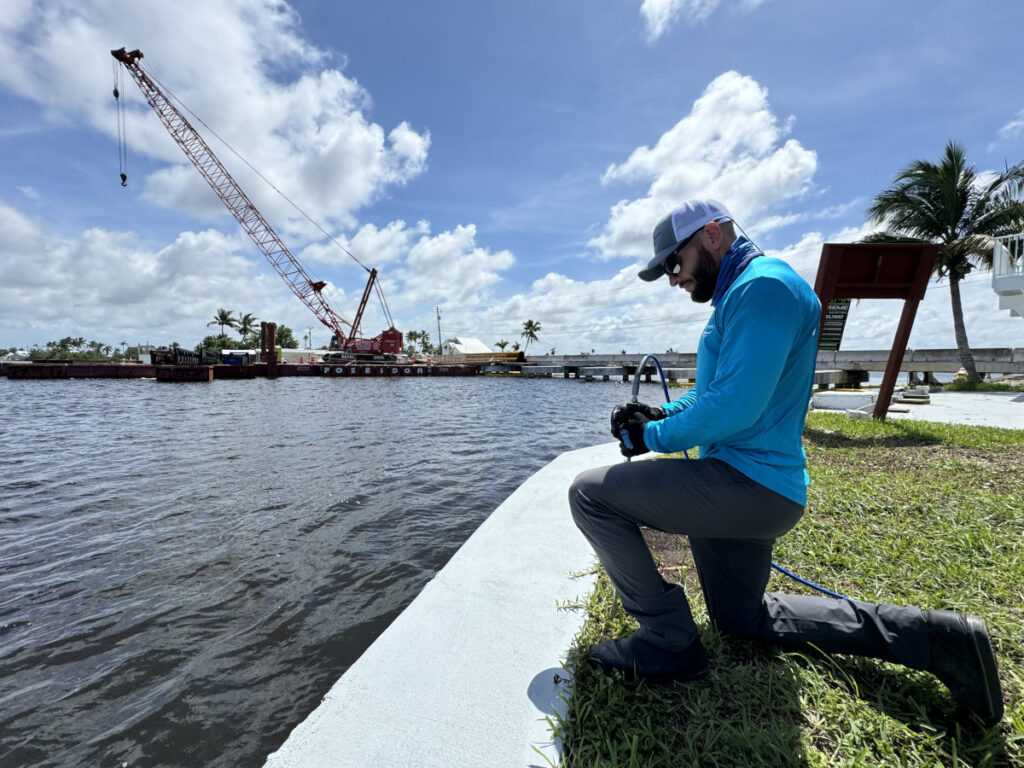
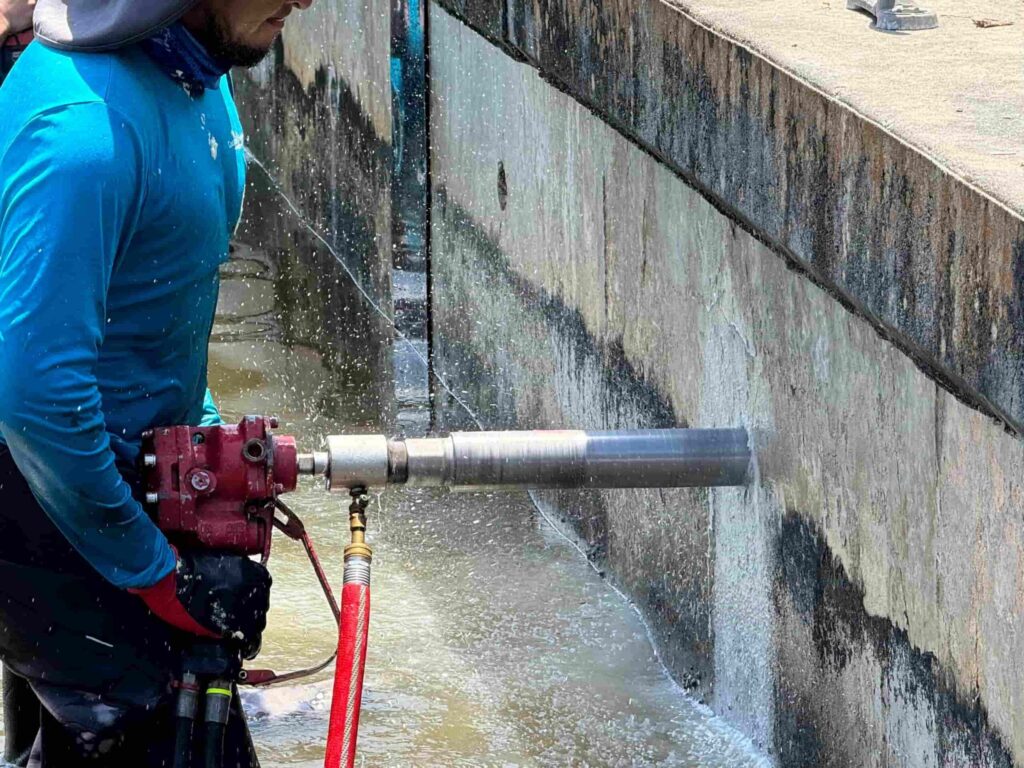
  • Engineering-based inspections
  • Soil probing and void detection
  • Drainage flow assessments
  • Anchor load-path evaluation
  • Long-term movement monitoring

Pro tip:

Stabilize soil first. Reinforce structure second.
This approach often delivers better, longer-lasting results.

FAQs: Signs & Seawall Attention


Most cracks are not immediately dangerous but should be evaluated for cause.


Every few years—or sooner if visible changes appear.


Many can be monitored, but understanding the cause helps guide timing.

A reputable inspection focuses on information, not sales pressure.

Yes. Drainage, seam repair, and stabilization often delay major work.

Final Takeaways

  • Most seawall issues develop slowly—not suddenly
  • Early signs are informational, not emergencies
  • Soil loss and water pressure are common root causes
  • Professional inspections provide clarity and options
  • Calm, proactive attention often saves money long-term

If your seawall looks a little different than it used to, the smartest next step isn’t guessing—it’s understanding why.

👉 Schedule a professional seawall inspection with Seawall Savers to get clear answers, practical recommendations, and peace of mind—without pressure.

Previous Post
Next Post

What Causes Seawall Cracks, Leaning, or Settlement? A Clear Homeowner’s Guide

What Causes Seawall Cracks, Leaning, or Settlement? A Clear Homeowner’s Guide

Introduction

Noticing cracks in your seawall, a slight lean, or sinking behind the wall can be unsettling—but it doesn’t always mean failure. In Florida, most seawall cracks, leaning, and settlement are caused by soil movement and water pressure behind the wall, not sudden structural collapse. In simple terms: seawalls usually move or crack gradually, often long before they become serious problems. In this guide, you’ll learn:
  • The most common causes of seawall cracking, leaning, and settlement
  • What’s considered normal aging vs. a sign of concern
  • How drainage, soil loss, and anchors affect seawall stability
  • When repairs make sense—and when monitoring is enough
This article is written for homeowners, HOAs, and property managers who want clear answers without scare tactics.

What This Topic Means for Florida Property Owners

A seawall is designed to hold back land, not just water. Over time, Florida’s unique conditions put constant stress on that system. For homeowners, visible cracking or settlement often raises questions like:
  • Is this dangerous?
  • Will this get worse?
  • Do I need to replace the seawall?
For HOAs and commercial properties, the concern is broader:
  • Long-term maintenance planning
  • Liability and safety
  • Budget forecasting
Understanding why seawalls crack or move helps you respond appropriately—whether that means monitoring, repairing, or reinforcing.

Why Seawall Cracks, Leaning & Settlement Matter (Expert Insight)

Field inspections across Florida consistently show that:
  • Over 60% of seawall movement starts behind the wall, not on the visible face
  • Soil loss and trapped water pressure are the leading contributors
  • Most issues develop slowly over years—not overnight
“Seawalls rarely fail without warning. Cracks, movement, and settlement are usually early indicators—not emergencies.” — Marine Structural Engineer The key takeaway: movement doesn’t equal failure, but it is information—and ignoring it removes your options.

Step-by-Step: The Real Causes of Seawall Cracks, Leaning & Settlement

1. Soil Loss Behind the Seawall (The #1 Cause)

Florida’s sandy soils are easily displaced by moving water. When water flows through or behind a seawall, it can carry soil particles with it.

Over time, this creates:

  • Voids behind the wall 
  • Settlement of patios, caps, or landscaping
  • Reduced support for the wall itself

Common signs:

  • Sinkholes or depressions near the seawall 
  • Cracks forming near seams or joints
  • Uneven ground behind the wall

How it’s addressed:

  • Seawall drain installation
  • Foam injection to fill voids and recompact soil

2. Hydrostatic Pressure (Water with Nowhere to Go)

When rainwater, irrigation, or tidal water builds up behind a seawall without proper drainage, pressure increases. This outward force can cause:
  • Horizontal cracking
  • Wall bowing or leaning toward the water
  • Joint separation between panels
Well-drained seawalls consistently last longer and move less.

3. Aging or Failed Seawall Seams

Seams are natural connection points between wall sections. Over time:

  • Sealants degrade
  • Joints widen
  • Water and soil escape

Once seams fail, soil loss accelerates.

This is why seam repair is often one of the most effective early interventions.

4. Inadequate or Aging Anchoring Systems

Older seawalls often rely on:

  • Deadman anchors
  • Timber tie-backs
  • Outdated anchoring designs

As these systems age, they can:

  • Stretch or loosen
  • Lose holding strength
  • Allow gradual forward movement

Modern helical tie-back anchors transfer load to deeper, stable soil layers and are commonly used to stabilize leaning walls.

5. Settlement from Normal Aging

Not all movement is a defect. Over decades:

  • Backfill naturally consolidates
  • Minor settlement occurs
  • Small cracks may appear

This is similar to a home settling over time. The key difference is rate and progression.

6. External Forces (Boats, Storms & Water Levels)

Repeated exposure to:

  • Boat wake energy 
  • Changing water levels 
  • Seasonal storm surge 

can accelerate existing weaknesses but rarely cause sudden failure on their own.

What’s Normal vs. What Needs Attention?

Often Normal

  • Hairline surface cracks 
  • Minor cosmetic spalling 
  • Small, stable settlement over many years 

Worth Evaluating

  • Cracks that widen over time
  • Noticeable lean or forward movement
  • Repeated soil loss behind the wall
  • Gaps forming at seams
An inspection helps determine which category you’re in.

Common Myths About Seawall Cracking & Movement

Myth #1: “Any crack means the seawall is failing”

Most cracks are repairable and manageable when addressed early.

Myth #2: “Leaning means replacement is required”

Many leaning seawalls are stabilized successfully with anchors and soil repair.

Myth #3: “Nothing can be done once settlement starts”

Foam injection and drainage systems are designed specifically for this issue.

Pro Tips & Tools Used by Seawall Professionals

  • Engineering-based inspections, not just visual checks
  • Soil probing and void detection
  • Drainage evaluations
  • Load path analysis for anchoring systems
  • Monitoring movement over time before major decisions
Pro tip: Stabilize soil first, reinforce structure second. This sequence often delivers better long-term results.

FAQs: Seawall Cracks, Leaning & Settlement

Most are not immediately dangerous, but they should be evaluated to understand the cause.

In many cases, yes—using tie-back anchors and soil stabilization.

Soil loss due to water movement through failed seams or lack of drainage.

Usually slowly over years, not suddenly—unless left completely unaddressed.

Yes. Early inspections often prevent larger, more expensive repairs later.

Final Takeaways: What to Expect from Your Seawall

  • Most seawall cracks, leaning, and settlement start behind the wall, not on the face
  • Soil loss and water pressure are the leading causes
  • Many issues are manageable and repairable when caught early
  • Inspections provide clarity—not pressure
If you’re noticing changes in your seawall, the smartest next step is understanding why—not guessing.

👉 Schedule a professional seawall inspection with Seawall Savers to assess movement, identify causes, and explore practical next steps.

Next Post